
Fully Managed Independent Travel in Guatemala: A Structural Model
What is fully managed independent travel?
Fully managed independent travel is a route-based model that combines private travel with complete logistical coordination. You choose your dates and travel without a group, while local teams handle lodging, transportation, guided experiences, timing, and operational details behind the scenes. It sits between three common options:
- DIY travel: maximum autonomy, maximum planning burden
- Group tours: low planning burden, low autonomy
- Fully custom luxury planning: high-touch personalization, typically higher cost and longer planning cycles
Fully managed independent travel keeps autonomy where it matters (your pace, your privacy, your dates) and removes autonomy where it creates friction (transfers, coordination, sequencing, logistics).
Related reading: Private vs Group Tours in Guatemala →
What does “fully managed” actually include?
Fully managed should mean the operational spine is solved, not just “we booked a couple of things.” In practice, it usually includes:
- Route logic: a sequence that reduces backtracking and risk (roads, weather, timing)
- Lodging coordination: check-ins, check-outs, and transitions that match transfer windows
- Transportation: vetted drivers and region-to-region transfers that fit the route (not improvised)
- Guided experiences where it matters: local experts added at the right points (not a guide 24/7 unless explicitly desired)
- On-the-ground support: coordination when plans shift (weather, road conditions, timing changes)
This matters in Guatemala because the difference between a smooth trip and a stressful one is often not “what you did,” but how transitions were managed. Example routes:
How is it different from DIY travel in Guatemala?
DIY travel can be excellent—but it demands attention to details that are easy to underestimate if you’re not on the ground. Common DIY friction points in Guatemala include:
- Transfer complexity: timing, road conditions, and reliable providers vary by route
- Sequencing errors: adding destinations that look close on a map but behave differently in travel time
- Weather variability: especially in rainy season, which impacts roads and pacing
- Coordination load: hotel check-in timing vs. transfers vs. activity windows
- Decision fatigue: repeated micro-decisions under time pressure
Fully managed independent travel keeps the experience “independent,” but removes the hidden work that makes independence expensive in attention.
How is it different from group tours?
Group tours are operationally efficient. They’re designed around shared schedules: one bus, one departure date, one pace, and one unified plan.
Fully managed independent travel is designed around the opposite constraint: you are not a group. The route is still structured, but the structure is built to support privacy and flexibility.
Here’s the clean comparison:
| Feature | DIY Travel | Group Tours | Fully Managed Independent |
|---|---|---|---|
| Departure dates | Any | Fixed | Any |
| Privacy | High | Low–Medium | High |
| Pace control | High | Low | High |
| Planning burden | High | Low | Low |
| Logistics risk | Medium–High | Low | Low |
| Local expertise | Optional | Central guide | Regional, right-sized |
Related reading: 7–9 Day Itinerary →
Why does this model fit Guatemala specifically?
Guatemala is not hard because it lacks infrastructure—it’s hard because the trip spans distinct regions with different rhythms:
- Antigua is compact and walkable, with predictable movement.
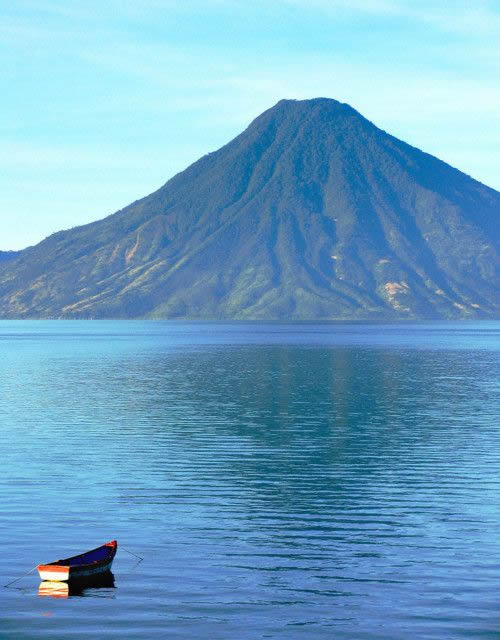
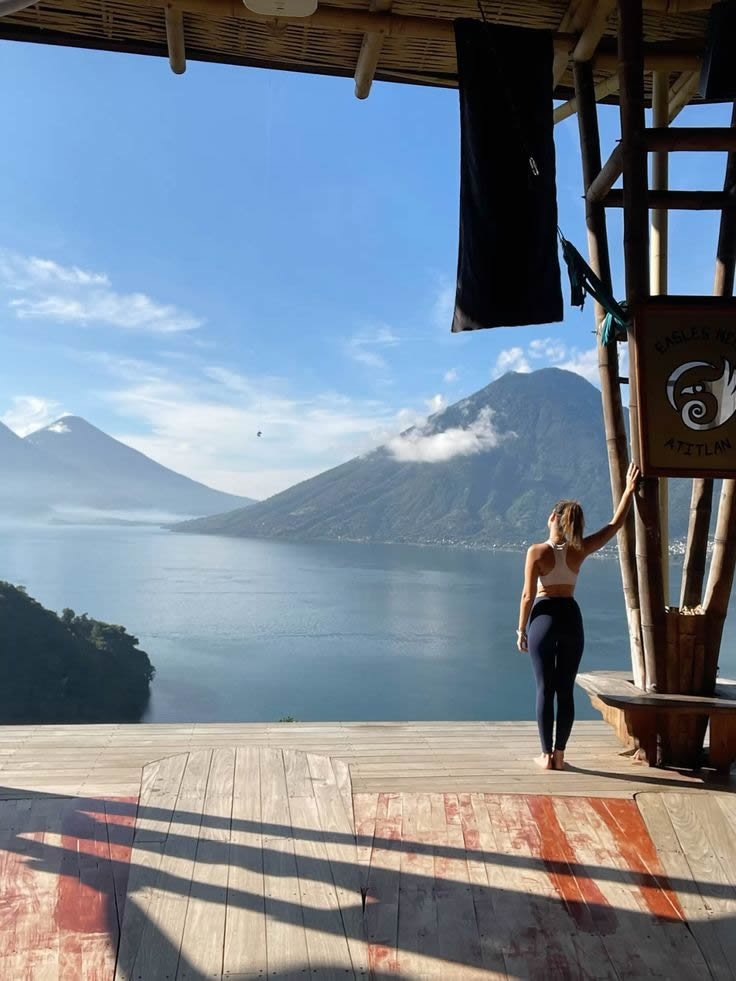
- Lake Atitlán is beautiful but requires correct sequencing and water/road transition logic.
- Flores/Tikal is geographically separate and works best when flights and transfers are coordinated.
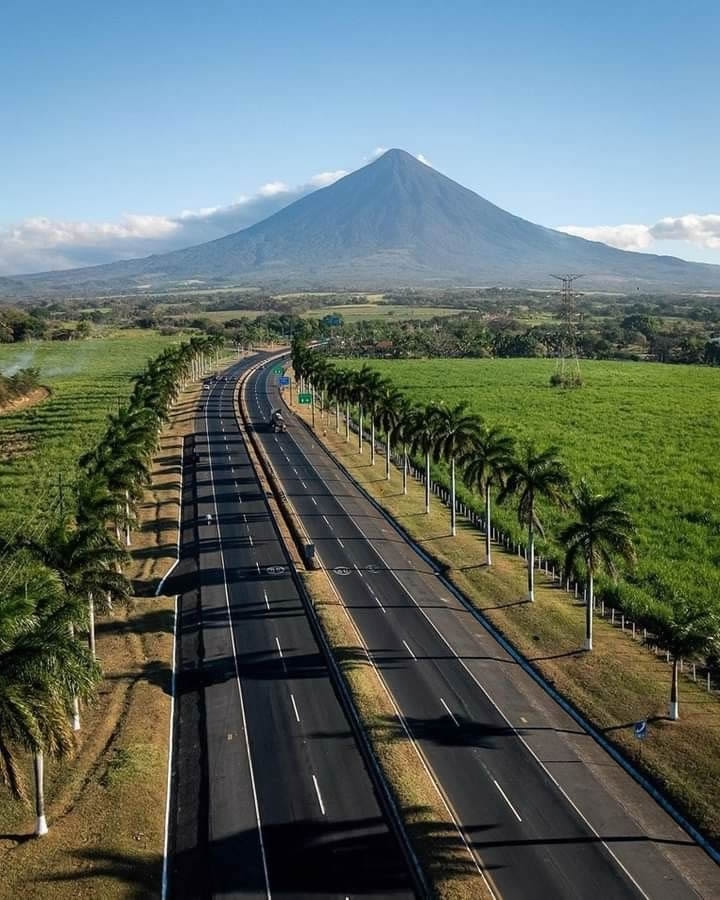
- Volcanic terrain introduces timing and weather sensitivity.
Fully managed independent travel is essentially a way to standardize the hardest parts (transitions and sequencing) while preserving the best parts (private travel, independence, local depth).
Who is this for (and who is it not for)?
It’s a strong fit if you:
- Want privacy (couples, families, friends traveling together)
- Prefer not to operate inside a group schedule
- Want Guatemala to feel expansive without being chaotic
- Want local expertise without constant handholding
It’s not the best fit if you:
- Want the cheapest possible trip (DIY will win on cost)
- Love the social structure of group travel
- Want fully bespoke luxury planning with unlimited customization
Where do Due South routes sit in this model?
Due South builds fixed routes that are designed to run smoothly, and then operates them locally so you can choose your dates and travel privately.
Explore routes designed around this model
FAQ
No. A private guided tour often implies a guide traveling with you throughout. Fully managed independent travel can include guides where needed, but the structure is built around coordinated logistics and regional expertise.
Yes. Routes are designed, but you’re not tied to group departure dates.
Not necessarily. The defining feature is coordination and reduced friction, not luxury amenities.
Yes—especially because the hardest parts are usually the transitions and sequencing.
The model works best in places where logistics and regional transitions matter—Guatemala is a strong example.